 This paper examines disinformation through a Peircean semiotic perspective, arguing that it is not the opposite of information but rather an ethical distortion of it. By situating disinformation within an ecosystem shaped by digital platforms, algorithms, and datafication, the study highlights how it reinforces pre-existing beliefs and constrains the expansion of knowledge. Drawing on Charles S. Peirce’s concepts of information, semiosis, and interpretants, the authors propose that disinformation operates through pragmatic purposes that differ from those of information: while information seeks continuous, self-correcting knowledge, disinformation sustains belief rigidity by exploiting emotional, energetic, and logical interpretants. The analysis explores how disinformation mobilizes adherence, sharing, and activism, forming habits of action resistant to contrary evidence. Ultimately, the paper characterizes disinformation as a semiotic process of ethical deviation that maintains ignorance and fosters dissent, thus shaping social behavior within contemporary communication environments.
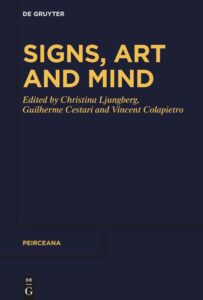
Alzamora, G. & Ribeiro, D. (2026). The Semiosis of (Dis)information. In C. Ljungberg, G. Cestari & V. Colapietro (Ed.), Signs, Art and Mind: Essays for Winfried Nöth (pp. 255-276). De Gruyter. https://doi.org/10.1515/9783112231937-016
Este capítulo que eu e Geane escrevemos é uma contribuição para o livro em homenagem ao nosso professor Winfried Nöth, publicado em outubro de 2026. Agradecemos aos editores Guilherme Cestari, Christina Ljungberg e Vincent Colapietro. O lançamento do livro ocorreu na Jornada do Centro Internacional de Estudos Peirceanos, ocorrida em Maio de 2026 na UnB em Brasília.